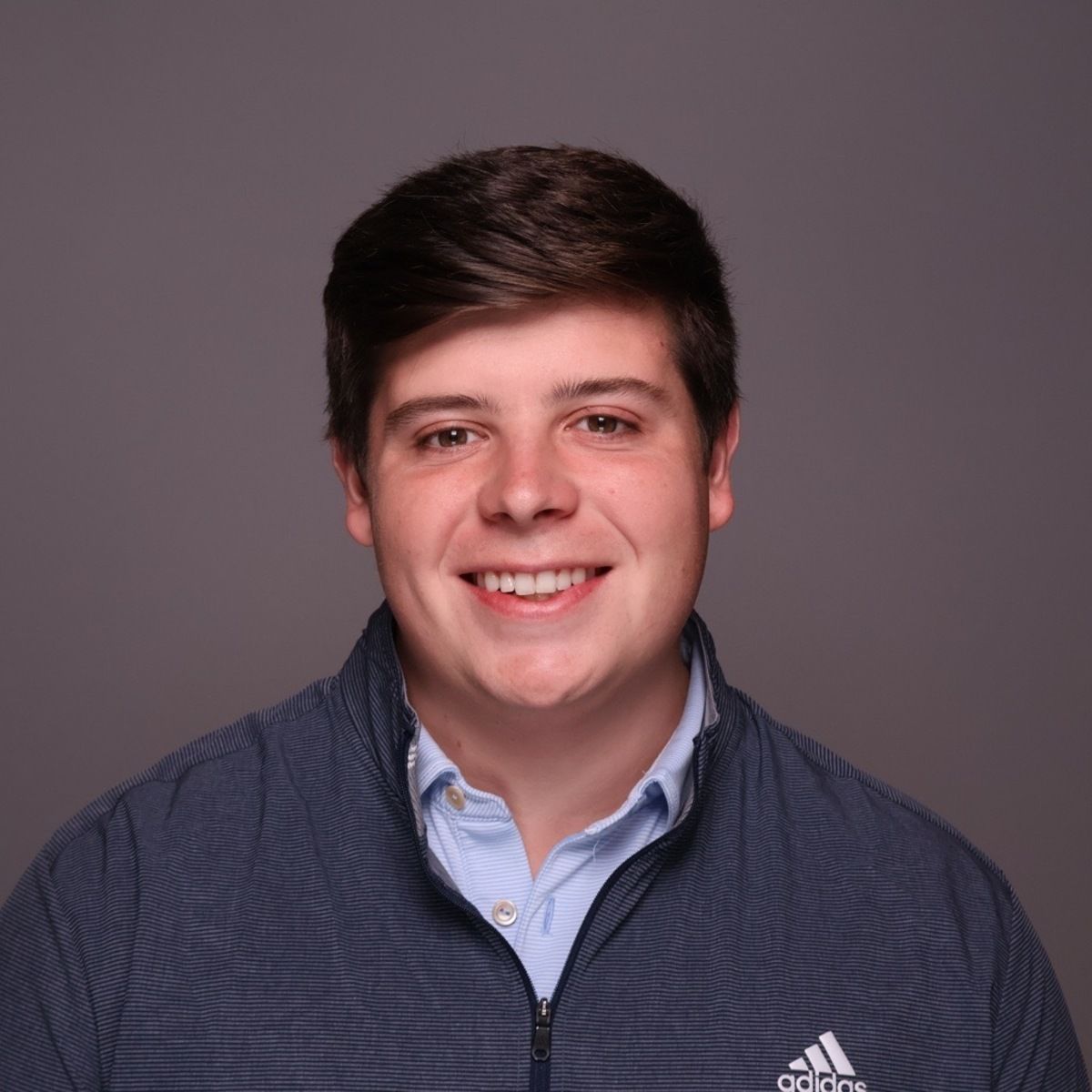

Meet Max Browne.
Max Browne was a football prodigy. A state champion and 5-star recruit to USC, he arrived in college as one of the top quarterback prospects in the country, eventually earning the starting job for the Trojans in 2016. But just a few games into the season, that opportunity slipped away. Sam Darnold took over the offense and Max was forced to reassess the path he had spent his entire life chasing. He transferred to Pitt ahead of the 2017 season in search of a fresh start, but in just the second game of the season he suffered a shoulder injury that ended his collegiate football career for good (read the full story here).
Max attacked rehab with the mindset that he was still going to find a way forward as a player. He moved to Carlsbad to train at EXOS alongside a class full of high-level prospects preparing for the draft, worked through an abbreviated pro day process, and earned interest from multiple teams, even picking up several rookie minicamp invitations.
Even still, his shoulder never fully cooperated. He kept training, kept rehabbing, and kept hoping that in a few more weeks things would turn a corner, but a few weeks became a few months, and eventually a year and things still weren’t quite right. By the time he worked out for the Steelers and Washington, Max could feel the reality of the situation (literally). He remembers throwing a 20-yard comeback route during the Steelers workout and realizing internally that his shoulder simply was not what it once was. On the bus ride back to the airport, he knew he had reached a dead end.

Max’s Career Path
That transition after sports can be hard. Like many athletes, he was leaving the game without the traditional internship experience or early career runway that many of his peers in business already had. But even while he was navigating the uncertainty of rehab, he had started to become fascinated by a different world: content, media, and broadcasting. In the fall of 2018, while training in the mornings, he began making YouTube videos in the afternoons.
Max’s interest in content was shaped by what he had seen up close at USC. He watched teammate Conner Sullivan, a walk-on quarterback, lean into YouTube in a way that was unconventional at the time and turn it into a real career. He also saw how JuJu Smith-Schuster used content and gaming to build a brand that extended far beyond what he did on the field. At the same time, Max was watching people like Dan Orlovsky carve out media relevance not because they had been superstar players, but because they understood where the industry was headed and were willing to create on their own.
Max knew that if he wanted to achieve his goals in broadcasting and media, he would need a proof of concept, and through these examples, he realized that content could help provide it.
At the same time, Max also needed a “real” job, and because of his interest in content, he took a great interest in the world Gary Vaynerchuk was building. A tough first job to land, but luckily he had an in.
Max reached out to Sam Darnold, the same quarterback who had taken over for him at USC, and asked for an introduction to Gary Vee’s team. Sam, who was with the Jets at the time, Gary’s beloved football team, made the connection, and after a few interviews Max landed a role on Gary Vaynerchuk’s team in New York, taking a minimum wage role and moving across the country for his first post-football opportunity.
At VaynerMedia, Max got a crash course in digital media. He worked in a channel manager role that included paid media responsibilities, helping run campaigns tied to Gary’s businesses and product launches, while also learning the mechanics of content strategy at a high level. He learned best practices for packaging, hooks, title text, retention, and the subtle choices that keep people watching, well before they were mainstream. Much of what is standard best practice today was still cutting edge then, and Max got to learn it from inside one of the most forward-thinking content operations in the space.
At the same time, the YouTube work he had started on his own was beginning to open doors on the broadcasting side. In 2019, USC Athletic Radio brought him in after a last-minute opening, giving him his first real traditional broadcasting opportunity. He was flying back and forth from New York to Los Angeles on weekends, working games on Saturdays and taking the red-eye home each Sunday to make his day job. He also began doing weekly hits for Stadium and picking up additional opportunities with SiriusXM and Pac-12-related coverage. The momentum was starting to build.
After about a year with Gary Vee’s team, Max moved back to Los Angeles and took a role with Lewis Howes and School of Greatness. That chapter was shorter, but it helped clarify something important for him. He enjoyed media, strategy, and entrepreneurship, but he did not ultimately want to spend his career building someone else’s platform. He wanted to build something of his own. That realization, paired with the practical need for a more stable income, led him into commercial real estate in early 2021.
What is a Sports Analyst?
A sports analyst is responsible for helping audiences understand the game beyond what they can see on the surface. In a broadcast setting, analysts work alongside play-by-play announcers to break down strategy, explain decision-making, and provide context around key moments as they happen in real time. Whether it is identifying coverage schemes, explaining adjustments, or highlighting player tendencies, the role is centered around answering the question every fan is asking: why did that happen?
Preparation is a major part of the job. Analysts spend significant time studying film, reviewing data, and researching teams, players, and trends ahead of each game. That work allows them to quickly recognize patterns and deliver informed insights during live broadcasts, often with only seconds to react.
At its core, the role requires a combination of deep sport knowledge, preparation, and the ability to communicate clearly. The best analysts are not just experts in the game. They are educators, storytellers, and translators, making complex ideas simple and helping fans see the game through a different lens.
For the next four and a half years, Max essentially operated in two careers at once. Commercial real estate became the day job and, in his mind, a way to create a sustainable foundation while continuing to chase broadcasting on the side. The original vision was that real estate’s commission-based structure would eventually allow him to scale back in football season and continue pursuing analyst work long-term. At the same time, he kept planting seeds in media. He called more games each year, stayed involved in content to varying degrees, and slowly built more credibility on both fronts.
The big shift came in 2023 when Max finally committed to content in a more serious way. Up to that point, he had been in and out, posting in waves and never fully going all in. Once he started showing up consistently, the momentum changed. His football content grew, his broadcasting opportunities continued to expand, and his work with the Pac-12 increased from a handful of appearances to a much more meaningful slate.
And then the big move.
Ahead of the 2024 season, Max shuttered his career in real estate, went all in on his broadcasting career, and accepted a role as the Lead College Football Analyst at The CW, calling the networks top games each week, largely across the ACC.
From the outside, the move looked simple, but internally, the decision had been building for months. He had reached a point where splitting his focus was no longer working. He felt like an average commercial real estate broker and an average sports broadcaster, and knew he needed to put all of his energy behind one direction if he wanted to become great at it.
That decision has already paid off. What began as a rehab-era YouTube experiment has grown into a channel with more than 50,000 subscribers (check it out here) and a broader content platform that now plays a meaningful role in his career. The same instinct that pushed him to start creating in 2018, before many athletes were thinking that way, is now one of the core reasons he has been able to differentiate himself in a crowded media landscape. And after a strong year with The CW, that momentum helped lead to his next move: joining ESPN, where he is continuing to expand his role as a broadcaster.
Max lost the path he thought he was supposed to follow. The story could have ended there. But instead he buckled down, was strategic, leaned into his network, and pushed forward with an intentionality that you don’t see from many.
That's how you find your way back in.
Q&A: Building a Second Act in Sports Media with Max Browne

Q. As a high-level collegiate athlete, you didn’t have the opportunity to stack the traditional internships and early work experiences that many students rely on. When your playing career ended, how did you overcome that and position yourself for your first opportunities in the professional world?
A. I think this is a great question, and the older that I get, it’s one that I feel like doesn’t get talked about enough for how difficult this is for college athletes.
The reason I say that is, I was a guy that pretty much had three college degrees. I was very much plugged into the fact that there was a world after football. Not saying I shortchanged my football career, but even with all of that forward thinking, I still had a hard time transitioning into the next phase of life and into the working world.
It’s really hard to take one step back to take two steps forward and put your ego at the door. When you’re 24, 25, 26 transitioning into that next phase, your peers in those entry-level roles are 21 or 22 and already have years of internships. That’s a hit to your ego when you’re used to being the guy as a collegiate athlete. So that’s just some context. It’s a passion subject for me.
In terms of how I overcame that, I made a conscious effort to remind myself of the long game. That might sound a bit high level, but it was about being forward-looking. At 26, when I got into real estate, you feel way older than the 22-year-olds coming out of college. But I had the foresight to think, at 30, no one is really going to care when you started.
It’s tough. I definitely felt behind in terms of industry knowledge and relationships. I felt like I was learning the basics while others my age were already moving into more advanced roles. But it comes back to keeping the long game in mind and understanding that in your 30s, no one really cares whether you started at 22, 25, or 27.
What matters is getting on the right path, or at least a path that you feel good about. I think that’s the biggest challenge, and the most important thing to focus on in your 20s.
Q. You committed early to showing up online and building a personal brand through your content. How has that decision influenced your career opportunities as you’ve built your path in sports media?
A. It’s been a game changer. I don’t think I have the sports media career I have without investing in my personal brand through content.
It’s one of those things where it doesn’t get me the job by itself, but at a certain level, it acts as a credibility enhancer and an exposure enhancer that allows you to get in the arena, so to speak. Some examples are more tangible than others.
I don’t think I get the opportunity with USC radio without doing YouTube first. I also don’t think I get the opportunity at Pac-12 Network, at least as soon as I did, without creating content. So in that sense, it is very black and white.
Then there are other opportunities where it is less direct. I was just talking about this with my agent. When I got the opportunity with the CW, did my presence on TikTok and Instagram directly impact that decision? I don’t know, probably not. But when decision makers can look and see proof of concept online, and recognize that this is where younger audiences are, I have to think that matters, especially as they are thinking long term.
So overall, it’s been a game changer. I don’t think I would be where I am in my broadcasting career without social media.
Q. If you were speaking to an athlete who already knows they want to work in sports after graduation, what would you tell them to start doing now so they are better prepared for that transition when their playing career ends?
A. Work in sports is broad. Whether that’s media, coaching, administration, sports partnerships, NIL, there are a lot of different directions you can go.
At a high level, I would say leverage the fact that you’re a student. I think a lot of people think, I’m just a student, why would someone meet with me, what do I have to offer? I would flip that. It is way easier to get a meeting when you are a student.
If you’re a USC football player reaching out to someone like Colin Cowherd asking to grab coffee, that is much more likely to get a yes than someone two years removed from playing trying to do the same thing. When you’re actively playing, people have a level of respect for that and are more willing to help. So that is where I would start.
A more nuanced point that applies across a lot of areas in sports is where people aim. A lot of students reach out saying they want to work at ESPN or Fox, or they want to be an agent at CAA or Wasserman. Those are the big, obvious destinations. But that’s also what everyone wants.
The way the industry is evolving, a lot of opportunity is coming from athlete-led media brands and more entrepreneurial platforms. There are a lot of athletes building their own operations, and those teams often need help. That can be a great way to get your foot in the door and potentially grow faster than being one of many within a large organization.
Starting with big brands is valuable, but there are only so many of those seats. I think people sometimes overlook these newer platforms, but five years from now, we may look back and say that was the right place to be.
Key Takeaways
1. Leverage your network
Max’s first opportunity came through a connection he had built earlier. That moment set everything in motion. Your network can create opportunities that would not exist otherwise, but only if you invest in it before you need it.
2. Play the long game
Starting a new path can feel like you are behind, especially when others around you have more experience. Max felt that transition firsthand. Over time, that gap matters less. What matters is getting on the right path and staying committed to it.
3. Your personal brand is leverage
Max’s content did not get him jobs on its own, but it consistently helped him get in the room. His YouTube videos created proof of concept, opened doors, and strengthened his credibility with decision makers. Showing your work publicly can create opportunities that would not exist otherwise.
Feeling Inspired? Check out these opportunities.
-Open Roles at VaynerMedia (Where Max started!)
Closing Thoughts
Thank you for reading this week’s edition of So You Want to Work in Sports. I appreciate you being part of this community.
If you have ideas, feedback, or future guest suggestions, feel free to reach out at [email protected].
If you want more hands-on support as you navigate the start of your career within sports, book a 1:1 session with me here. The sooner you start preparing, the more confident you will feel when opportunities come your way.
Win the week!
-Ethan
Want more from Max?
Connect on LinkedIn
Subscribe on YouTube
Follow on Instagram
Follow on TikTok
Follow on X