In partnership with


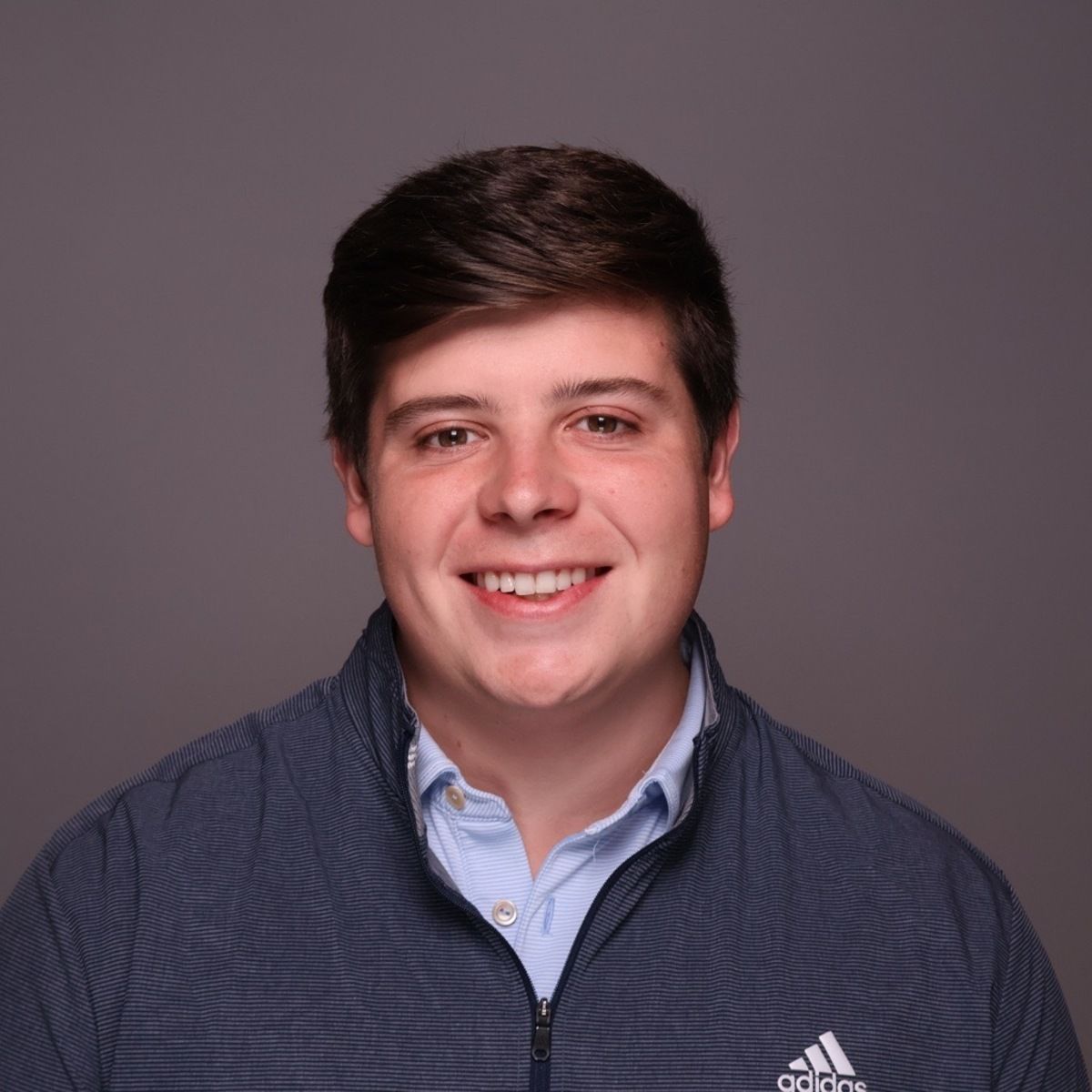
Meet Travis Misner.
When Travis stepped on campus at Loras College, his plan was simple: Play baseball and become a teacher. It was a path that reflected the childhood he experienced growing up in a small town. Because of that, a career in sports business was not something he had ever considered.
That perspective began to shift through his involvement with the NCAA Student-Athlete Advisory Committee. What started as campus-level engagement his Athletic Director looped him into eventually led to Travis representing Division III athletes at the national level. The experience put him in rooms with athletic directors, conference commissioners, and NCAA leadership, exposing him to a side of sports he had never seen before. Maybe even more important, those leaders were asking for his perspective. That experience built confidence and sparked the idea that he could build a career within sports.
While he was navigating this potential career change, an NCAA staff member, Christina Wright, asked Travis what his plan was after graduation. When he admitted he was still figuring it out but knew he wanted to stay in sports, she pointed him toward Ohio University’s sports administration program, one of, if not the, top graduate programs in the country. Travis initially hesitated, aware of the program’s reputation and unsure if he was a strong enough candidate, but Christina encouraged him to take the shot and helped him think through how to position his experience. To his surprise, he was accepted, moving him one step closer to a career in sports.
During his time at Ohio, Travis initially set his sights on becoming a Division III athletic director. In conversations with mentors and faculty, he was asking a simple but important question: how do I actually get there? The answer pointed him toward revenue generation. If he wanted to lead an athletic department, he needed to understand how it was funded. That guidance led him into fundraising and development roles, including a position with Northern Illinois’ athletic department and Ohio’s College of Business, where he began building experience in generating revenue within college athletics.
Through these roles, Travis quickly began figuring out what he enjoyed and what he did not. While he valued the relationship-building aspect of development, the day-to-day work was not something he found fulfilling, so with only a few months remaining before graduation, he made a late pivot toward sponsorship, identifying it as a space where he could combine relationship building with creativity while still providing him with the opportunity to impact the bottom line.
The question - how could he actually make that leap with no true partnership experience?

Travis’s Career Path
He found the answer in Ohio University’s alumni directory, which he used to identify and reach out to professionals across the sports industry. One of those calls was to John Bollinger of the Kalamazoo Growlers, a high level summer collegiate baseball team. The conversation led to an in person visit, which then led to John offering Travis his own role as he moved away from the organization. He wanted to leave the position in good hands, to someone who he knew would work hard and pour themselves into the opportunity, and even though he didn’t have the formal partnerships experience yet, John knew Travis would be that guy.
After graduation, Travis dove into the role head first. He was forced to quickly develop the ability to prospect, pitch, and close deals, often working directly with experienced business owners. He took on a wide array of responsibilities in a short period of time, which may have been overwhelming for some, but Travis thrived. He learned quickly, and the results showed. While with the club, Travis and his team were driving sponsorship revenue in the upper six figures for an organization that was only seeing around 80k fans per season.
Despite the success, after two seasons with the Growlers and with plans to start a family, Travis knew it was time to take the next step. He applied for a role with the Charlotte Hornets through TeamWork Online, and began an extensive interview process. Seven interviews later, and Travis was sure he had to be close to an offer, but then, silence.
Rather than sit on his hands, Travis went back to something he had learned in Kalamazoo. The team had a philosophy around outreach: if you want a response, you have to be memorable. One of the ways they did that was through what they called the “$2 letter.” The idea was simple. Stand out. Be intentional. Give someone a reason to remember you. So Travis wrote a personalized letter to members of the hiring team and included a $2 bill. It was a small gesture, but it reflected exactly how he approached his work.
Shortly after, he got the call.
Travis and his family moved to Charlotte, where he joined the Hornets and stepped into a completely different environment. The scale was bigger, the partners were more sophisticated, and the expectations were higher. Travis leaned in, and over the next four years, he thrived within the organization, ultimately moving into a senior role in partnership development. During that time, he also navigated multiple leadership changes, which forced him to adapt quickly and consistently deliver under different styles of management. It was an experience that sharpened his ability to operate in dynamic environments and continue producing results regardless of the circumstances.
What are Sports Partnerships?
Sports partnerships are the commercial relationships between brands and sports properties such as teams, leagues, events, and venues. These partnerships are designed to help brands reach and engage fans in meaningful ways while providing revenue to the organizations they support. Unlike traditional advertising, sports partnerships are often integrated into the fan experience through elements like jersey sponsorships, in-venue signage, digital content, naming rights, and experiential activations.
At their core, sports partnerships sit at the intersection of marketing, sales, and strategy. Professionals in this space are responsible for identifying potential brand partners, understanding their business objectives, and building customized programs that deliver measurable value. That can include increasing brand awareness, driving sales, enhancing customer engagement, or aligning with a specific audience or moment in culture.
On the team or property side, partnerships roles focus on generating revenue and maximizing the value of available assets. On the brand side, they focus on evaluating opportunities and activating partnerships effectively. At the agency level, like Travis’s role today, the work often involves connecting both sides, structuring deals, negotiating terms, and ensuring that partnerships are executed in a way that benefits all parties involved.
In the process, Travis began to build a reputation in the city, and that reputation didn’t take long to pay off. When Tepper Sports & Entertainment began building out its partnerships team ahead of Charlotte FC’s inaugural season, they reached out to Travis about joining the organization. It was not a role he had been actively pursuing, but the opportunity was compelling. Fewer games, more flexibility with a growing family, and the chance to be part of launching a new franchise made it a difficult opportunity to pass up.
So he made the move and expanded his experience across both the NFL and MLS, working on partnerships tied to the Carolina Panthers, Charlotte FC, and Bank of America Stadium. The role gave him exposure to a broader set of assets and further developed his ability to build partnerships across multiple properties.
Then, just over a year later, the pattern repeated itself. Another call.
This time from a former manager at the Hornets, who had moved to Playfly Sports. He was calling with a role that wasn’t posted online, but rather had been shaped specifically with Travis in mind, designed to leverage his background and expand his impact.
Playfly operates at the intersection of sports, media, and sponsorship, working with teams, brands, and networks across the country to drive revenue through partnerships. In this role as Director of Team Partnerships and Strategy, Travis works across a wide range of organizations, collaborating with brands, media partners, and teams to build customized sponsorship solutions. His role blends strategy and execution, requiring both a detailed understanding of how partnerships are built and a broader perspective on how they scale.
Looking back, Travis is the first to admit that his path was not linear, especially at first, but the through line is consistent. He took the opportunity in front of him, committed fully to it, and stayed open to change when something no longer fit. The rest took care of itself.
Q&A: Building a Career in Sports Partnerships with Travis Misner

Q. You’ve worked across baseball, basketball, football, soccer, and now nationally across multiple leagues and properties at Playfly. How has working across so many different sports shaped your perspective, and what advantages has that versatility given you in your career?
A. The biggest thing I've learned is that while asset mixes vary from sport to sport and team to team, the sponsorship process really doesn't change at all. It's rooted in the client's interests; what are their goals? Once you have that information, it's aligning it with whatever asset mix you have to create a program that's customized to their needs. It doesn't have to be as complicated or overwhelming as it may seem, which is something I wish I would have realized 10 years ago when I was getting started.
Being in a role the last 3 years where I have had the privilege to work with so many different properties and brands, it's allowed me to realize that just because someone is successful at a giant, blue chip property, doesn't mean they're necessarily better at what they do. Having worked for a few challenger properties, I have doubted my process because the results didn't always follow. Being exposed to so many different proposals and seeing how so many different teams work, there is so much out of your control that can kill your confidence, if you allow it to. I've sat through terrible pitches with teams that I perceived to be the best-of-the-best, and I've been a part of incredible sales meetings with lower tier teams who punch above their weight. Learning from your leaders, your peers, others in the industry, and most importantly - your failures - is what makes someone dynamic.
Sponsorship aside, no shade the those who love the grind of a summer full of baseball or a full NBA slate of games, only having to work 10 home games in the NFL was the best.
Q. Your last two roles came through people who knew your work and called you directly. How do you build the kind of relationships that lead to opportunities like that, and what advice would you give to young professionals who want to create that kind of trust over time?
A. People are naturally attracted to others who are genuine. At every stop along my path, and in everyday life, I try to show an interest in whomever I'm talking to because I am interested. I really enjoy meeting people from different walks of life than me and finding connections that you may not realize exist. I was recently talking with a senior executive at my company who summarized it in a way I had never considered - you can connect with anyone through four areas of commonality - family, food, travel, and sports. Odds are I can find something we have in common in those 4 categories that we can relate to each other on, which naturally creates trust when you feel connected to someone else.
The last thing I'll add to this is probably the most important to me - and that's being willing to show some vulnerability. Being buttoned up all the time is a red flag to me, because nobody is that put together. If that's my perception in a conversation, I know there's a wall up between us that I don't always have the time or energy to try and get past. I try to be nothing other than myself (which has taken practice) and I've found that people usually reciprocate.
Q. Your current role at Playfly sits at the intersection of sponsorship, media, and strategy. For someone who wants to work in partnerships or strategy at that level, what skills matter most, and what should they be doing now to prepare?
A. The key to a strategy-based role is that you have to have experience doing it before you can really put strategy behind it. That could be sales at a property, activation at a team or agency, it doesn't really matter, but you have to have an understanding of how the game is played before you can really apply strategy towards it. I worked in sponsorship sales on the property side for ~7 years before being able to truly dive into the strategy side, and even then, it felt like I needed another 12-18 months to truly figure out how to apply my experience effectively.
However, regardless of what role someone currently sits in, you can always have an eye towards impacting the overall strategy of your team. If you're early in your career or aiming to move to a full-time strategy role, how are you making an impact on your team's strategy today? Just because you're not leading it doesn't mean you can't make an impact. Dedicated strategy roles are fairly new to the industry, and still most properties don't have a fully dedicated person for that type of role, so find ways to help the collective move forward while still doing your job. Being a dynamic member of a team is so important to the overall success of a team, and the best way to gain experience to put yourself in a position to go for a strategy role down the road.
Key Takeaways
1. Get in the room
Travis’s career trajectory changed when he got involved with the NCAA Student-Athlete Advisory Committee. That experience put him in front of athletic directors, conference leaders, and decision-makers, giving him exposure to opportunities he didn’t know existed. Getting in the room can change how you think, who you meet, and what becomes possible.
2. Differentiate yourself
In a competitive hiring process with the Hornets, Travis leaned on a tactic he learned in minor league baseball: the $2 letter. It was simple, but memorable. When everyone has similar qualifications, the small details matter. The extra effort to stand out can be the difference between getting overlooked and getting the offer.
3. Relationships first
From Ohio to Kalamazoo, to Charlotte and Playfly, relationships have consistently opened doors in Travis’s career. Mentors gave direction. Leaders made introductions. Former managers created opportunities. His work earned him credibility, but the relationships created access.
Feeling Inspired? Check out these opportunities.
-Check out the 45+ open roles at Playfly Sports here.
Closing Thoughts
Thank you for reading this week’s edition of So You Want to Work in Sports. I appreciate you being part of this community.
If you have ideas, feedback, or future guest suggestions, feel free to reach out at [email protected].
If you want more hands-on support as you navigate the start of your career within sports, book a 1:1 session with me here. The sooner you start preparing, the more confident you will feel when opportunities come your way.
Win the week!
-Ethan
Want more from Travis
Connect on LinkedIn
Your Tax Data, Finally in One Place

Are you tired of hunting down data, fixing errors, and manually updating disconnected spreadsheets?
Tax reporting isn’t a simple as it used to be. You need real-time, flexible reporting so you can confidently make decisions backed by accurate, centralized data.
Learn how bringing all your tax information into one central system automates repetitive tasks, improves scenario planning, and frees your team to focus on strategy instead of data entry.
Whether you operate in one country or dozens, Longview Tax scales with you—reducing risk, speeding up your close process, and helping you optimize tax policies across all jurisdictions.