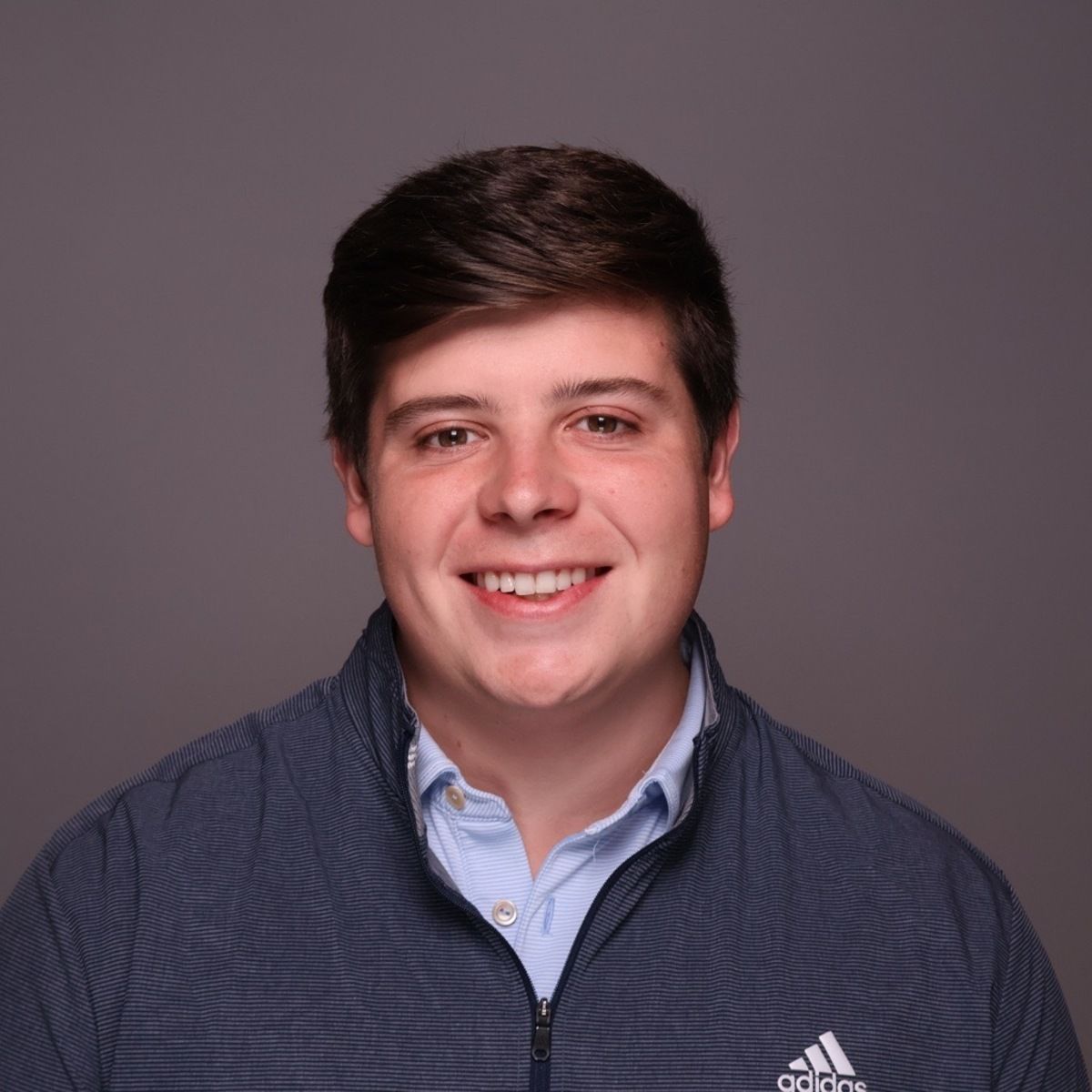

Meet Bill Colvin.
Bill has been leading Colvin Sports Network for more than 23 years. He is widely respected as a trusted voice in golf and sports marketing, someone brands and properties call when they need strategy, connections, and a team to execute their latest initiative.
But Bill’s story doesn’t start with golf, or even sports at all - it starts in the U.S. Navy.
After graduating from The College of Wooster in 1979 with a degree in sociology, Bill wasn’t entirely sure what he wanted to do or what his future would hold. Seeking direction, he turned to the influence of his parents, who both served in the U.S. Army, and his future father-in-law, a Naval officer. Their advice led to his enrollment in Officer Candidate School, launching a seven-year career in the Navy, where he rose to the rank of Lieutenant Commander.
The Navy placed Bill in leadership roles overseeing teams of 20–25 across engineering and operations roles, even serving as Chief Engineer during his second contract. It was wildly different from the work he does now, but the lessons in leadership, accountability, and people management proved invaluable. However, when he and his wife began discussing the start of their family, he knew that it was time to consider where his next opportunity may lie.
The answer came from a book called What They Don’t Teach You at Harvard Business School by Mark McCormack, the founder of International Management Group (IMG), one of the earliest large-scale sports marketing firms. Until that moment, Bill didn’t know sports marketing was an industry, let alone a career path. The book planted a seed. Sports marketing combined business, relationships, and competition in a way that made Bill excited about his future.

Bill’s Career Path
With the help of his wife and her family, Bill tapped into every connection he could find just to get an interview. Conversations led to introductions. Introductions led to interviews. Interviews led to more interviews. He flew from Newport to Cleveland multiple times, often waiting weeks between conversations with no clarity on whether the opportunity would materialize. Bill was an unconventional candidate. He was older than most entry-level hires, but without the sports marketing experience expected for mid-level roles. What he did have was seven years of leadership experience from the Navy and a clear willingness to start wherever IMG needed him.
That ended up being enough. Bill started at IMG in 1987 in a makeshift office, cold calling and learning the business from the bottom up. Over time, he worked his way into the golf outings and events side of the business, where he began to find his footing. The discipline, structure, and leadership habits he had developed in the Navy helped him grow quickly. He learned fast, earned trust, and steadily took on more responsibility. Over nearly a decade at IMG, Bill rose to Vice President within the golf division, establishing himself as an expert in the golf space.
In the mid-1990s, Bill made the decision to leave IMG and join Golf Watch, a startup that was pushing the boundaries of hospitality in professional golf. The concept was ahead of its time: premium access, enhanced fan experiences, and a more immersive way to engage with tournaments.
Leaving a powerhouse agency for a startup might have seemed risky to most, but Bill didn’t view it that way. He evaluated the opportunity, the people involved, the upside, and made a calculated risk. Even when Golf Watch ultimately didn’t scale the way Bill and the team hoped, he wasn’t scared away from the entrepreneurial path. In fact, he leaned into it further.
In 1998, Bill partnered with some of his former colleagues to found MarComm Partners, a smaller, more agile sports marketing firm. Compared to a global agency, the operation was lean, allowing them to work fast, adapt quickly, and take on a level of ownership that you don’t frequently see at larger agencies. To put it simply, Bill loved it.
The business was highly successful, peaking in 2001 when MarComm was acquired by Octagon (where I work!). Bill spent two years there as a Senior Vice President, as was required by the contract of the acquisition, but when his term was up, Bill began planning his next move. While he respected the organization, the large-agency structure wasn’t where he saw his long-term future. He had already experienced both sides of the industry: global scale and small-team flexibility. He knew which environment suited him best.
What is Golf Marketing?
Golf marketing sits at the intersection of brand strategy, sponsorship, and relationship building. Brands invest in golf to reach highly engaged audiences through athletes, events, media, and experiences. Golf marketers help shape how those investments come to life, from identifying the right partners to building programs that create real value for both the brand and the property. That can include sponsorship strategy, athlete and ambassador programs, events and hospitality, content and media integration, and long-term partnership management.
Because golf touches so many industries, including consumer goods, finance, automotive, and B2B, the work is often broad and relationship-driven. Roles in golf marketing can span strategy, sales, client services, events, operations, and consulting. The space rewards people who understand both the business side and the culture of the game, making it a powerful lane for building a long, adaptable career in sports.
So, in 2003, Bill made the leap.
He founded Colvin Sports Network without a formal business plan and without guaranteed clients. What he did have was experience, relationships, persistence, and confidence in his ability to figure things out. Over the last 20 years, Bill has positioned Colvin Sports Network as a strategic consultancy with a deep network of trusted partners. When projects require scale, he pulls in the right people to support, but he has intentionally kept his team lean, allowing him to stay hands on and agile with each client he works with.
Through his company, Bill has worked on everything from launching professional tournaments to building hospitality programs, advising brands on long-term sports investments, driving multi-million-dollar charity campaigns, and helping properties rethink how they engage fans. In golf especially, he has often found himself working at the edge of where the industry was headed, not where it had already been.
Bill’s path into sports would be difficult to replicate today, but the principles behind it are timeless. Start where you can, learn fast, build real relationships (ones you maintain even when there isn’t a financial incentive), and don’t be afraid to take responsibility before you feel fully ready.
Colvin Sports Network is the product of decades of those decisions. Bill’s career is a reminder that there is no single-entry point into sports, and no universal finish line. The only constant is the work you put in, and the people you choose to build with along the way. Pick good ones, be a good one yourself, and you might just find yourself with a career like Bill’s.
Q&A: Building a Career in Golf Marketing with Bill Colvin.

Q. Your career has been built on relationships. What are 2–3 habits you’ve used to build and maintain such a strong professional network over time?
A. Today it is much easier, and I use LinkedIn (and there are others) the most as my tool of choice. There are significantly enhanced ways to use LinkedIn that maximize the outcome of getting in touch and staying in touch and I would encourage a course to learn the best practices.
The single biggest, call it habit, or call it belief, is to keep as many connections as possible even when you are not pursuing or doing business with someone. Relationships are hard. People move around. People change titles. Make it a dedicated part of your week.
There are no time clocks in keeping a relationship fresh. IF something reminds you of someone or some mutually shared event, send a picture, send a note (or both) and bring back the occasion to enjoy together again. The DAY IN THE LIFE OF part of the Apple cloud reminders is an excellent way to share common ground again and likely put a smile on someone's face.
Q. You’ve worked inside one of the largest agencies in sports and also built and operated much smaller, leaner organizations. What are the biggest differences between big-agency and small-agency work, and how did each environment shape the way you approach sports marketing today?
A. I worked at TWO of the biggest agencies (IMG / Octagon) and arguably the smallest agency in the world and some sizes in between. Every step down the ladder in size I became more fulfilled. Large agencies have their places of course, but I found much of the sales to activation process to be a bit disingenuous in this respect. At a large agency, the senior executives with the experience sold the prospect on the product but then turned the implementation over to junior personnel. This works if the client isn't knowledgeable, because they of course do not know any better or the state of the possible, but I found it hard for me personally to promise one thing (my involvement) and not deliver. So, I keep my hands in the work for our clients, which naturally keeps my agency small, but I find great satisfaction in starting and finishing a commitment.
Q. As someone who has built teams and partnerships throughout your career, what qualities do you look for most in partners or employees? And for students and young professionals, how can they start developing those traits early in their careers?
A. Sounds simple but just a couple of qualities that really matter to me. They are not style or personality, but rather devotion, loyalty, and most importantly, believability. IF you tell someone you are going to do something, do it. IF you cannot do it in the time frame, you promised, just let the client (or me) know. Stuff happens. This builds trust and that is super important, particularly in today's world.
Key Takeaways
1. Prioritize Genuine Relationships
Careers in sports are built on trust. Focus on building real relationships long before you need something in return. Stay in touch. Be helpful. Be genuine.
2. Don’t Be Afraid to Bet on Yourself
Not every opportunity will come with a clear roadmap. Sometimes the best moves are the ones where you back your experience, your instincts, and your willingness to figure it out as you go.
3. Skills Translate and Timing Isn’t Fixed
There is no expiration date on changing directions and chasing your dream career. Leadership, communication, sales, and problem-solving carry across industries. What you have learned so far is rarely wasted, it is often the foundation for what comes next.
Feeling Inspired? Check out these opportunities.
Closing Thoughts
Thank you for reading this week’s edition of So You Want to Work in Sports. I appreciate you being part of this community.
If you have ideas, feedback, or future guest suggestions, feel free to reach out at [email protected].
If you want more hands-on support as you navigate the start of your career within sports, book a 1:1 session with me here. The sooner you start preparing, the more confident you will feel when opportunities come your way.
Win the week!
-Ethan

Are you planning your next career move, but don’t know where to start? Do you want the chance to win a prize pack valued at over $1500?
Anyway.ai is here to help you figure out your next step, with fun, interactive mini-courses where you can build real-life skills, learn about career opportunities, and get the chance to win epic prizes along the way.
Every few weeks, we feature a new theme with a fresh prize pool to match. This week, we’re featuring careers in sports - what’s out there, how to build you career, and how you can prepare right now for the sports industry career of a lifetime.
Plus, you could win one of three prize packs, including a 13” MacBook Air, AirPods 4, and more. All you need to do is head to Anyway.ai, sign up, complete the featured courses, verify your identity, and you’re in!
Dive in and get your competition entry in less than 10 minutes here.