In partnership with


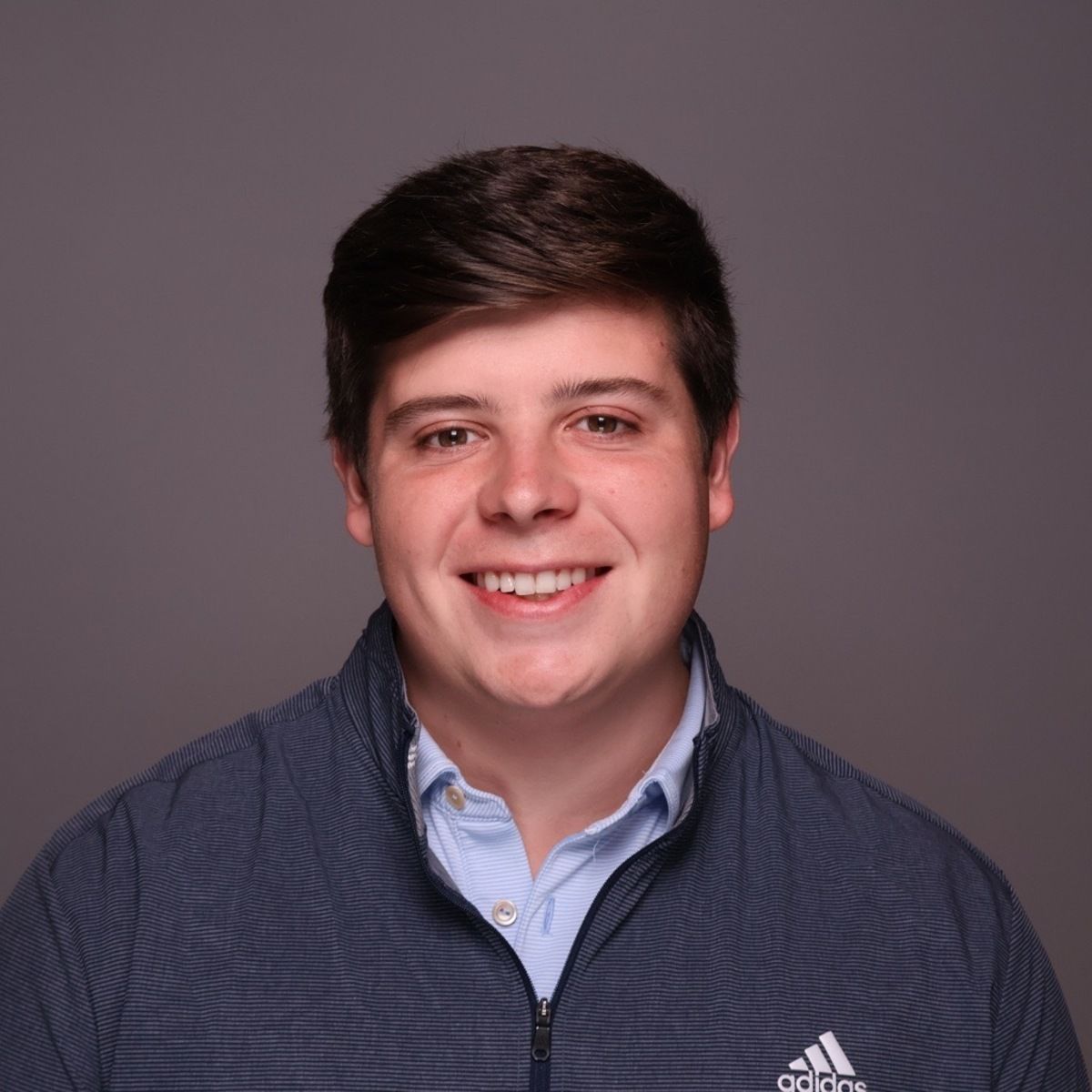
At 20 years old, Dominic has already worked inside professional first-team environments across North America and Europe. He has served as an assistant coach, analyst, and individual coach, operated within different football cultures, and been entrusted with real responsibility at an age when most aspiring coaches are still trying to get their foot in the door.
But what makes Dominic’s path so remarkable is not just how quickly it moved, but how early it started.
Dominic began coaching at 12 years old, volunteering with local youth teams and helping train players only a few years younger than himself. At that age, it wasn’t about building a resume or preparing for a career - he simply enjoyed teaching the game and thinking about it from the sidelines. Coaching felt natural.
By 15, Dominic had taken on a coaching role within the academy he played for, Sigma FC, one of Canada’s most respected development clubs. While still competing, he began working with players aged 11 to 15, designing sessions, assisting training, and learning the structure and discipline of a high-performance environment from the inside.
I have to imagine that this was the first time for Dominics coaches that a player so young was asking to coach within the academy, but they were incredibly supportive, seeing his curiosity and game understanding as strengths worth developing. Making that opportunity work, however, required real sacrifice at home. His dad took on the added responsibility of driving him to and from training not only for his own sessions, but for the teams he was now coaching as well. What began as two hours at the facility often became four, a commitment his family embraced in support of his ambition.
Around that same time, Dominic suffered a significant knee injury, tearing his LCL and dealing with nerve complications that kept him sidelined for roughly 14 months. It was a difficult stretch, but not a dramatic turning point in the way injuries often get framed. Dominic had already committed to coaching. The injury didn’t push him toward it. What it did provide was time. Time to study. Time to observe. Time to deepen his understanding of the game while his body healed.

Dominic’s Career Path
After his recovery, he returned to the field and continued competing, but as he moved toward his senior year of high school, his priorities became clear. He wasn’t chasing a scholarship or a professional playing career. He wanted to pursue a career as a coach.
Sigma’s staff recognized Dominic’s football intelligence and analytical mindset. They trusted him with more responsibility, gradually expanding his role. Soon, he was serving as an opposition analyst for Sigma FC’s League1 team, breaking down upcoming opponents, preparing tactical reports, and contributing to match preparation while still playing himself.
From there, his responsibilities continued to grow. He became head coach of Sigma’s U15 team while also serving as an assistant coach for the League1 side. He was now coaching players older than himself, including men in their 20s and 30s.
To do that effectively, Dominic learned early that being young meant being deliberate. He couldn’t blur lines. He couldn’t try to be friends. Authority came from clarity, preparation, and consistency. Maintaining his distance from what could have been friendships wasn’t about ego. It was about leadership.
That leadership and experience granted him one of the most important opportunities of his career.
At 17, after the head coach received a red card the match prior, Dominic stepped in as head coach for a League1 match against the top team in the league. For the full 90 minutes, every decision was his. He leaned heavily on his preparation, including detailed opponent analysis that showed when they were most dangerous. Acting on that data, he made a tactical adjustment designed to help the team survive a critical stretch of the match. In hindsight, the decision did not work. The team conceded twice in a short window and ultimately lost.
It was painful, but it was invaluable.
Dominic has since described that match as one of the most important learning experiences of his life. Not because it went well, but because he was trusted with responsibility, allowed to fail, and given the space to reflect afterward.
When he graduated high school, Dominic decided it was time to push forward.
He began reaching out relentlessly. Hundreds of messages. Calls. Follow-ups. He didn’t wait for roles to be posted. He chased environments where he knew he could learn and develop. That persistence led him to Vancouver Football Club, where he joined a fully professional first-team staff as a video analyst and assistant coach under Afshin Ghotbi, a coach with World Cup experience and a long international résumé.
For Dominic, Vancouver was a classroom. It was his first exposure to the day-to-day rhythm of professional football: staff meetings, training planning, player management, and accountability at scale. He absorbed everything.
That momentum carried him to Europe. In mid-2024, Dominic joined FC Midtjylland in Denmark as an individual coach working primarily with attacking players at the first-team level. The football was elite. The culture was different. Denmark emphasized structure, efficiency, and boundaries. Work-life balance was respected. Emotional expression was limited. It forced Dominic to adapt his communication style and leadership approach rather than impose his own.
He learned that coaching doesn’t exist in a vacuum. Culture shapes football, not the other way around.
Understanding the UEFA Coaching License Path
In European football, coaching progression is structured through the UEFA licensing system, a tiered pathway designed to prepare coaches for increasing levels of responsibility. Coaches typically begin with UEFA C and B licenses before advancing to the UEFA A License, which qualifies them to serve as a first-team assistant or head coach at professional clubs in many domestic leagues. The highest level, the UEFA Pro License, is required to be a head coach in top divisions and European competitions.
What makes this system so demanding is not just the coursework, but the experience required to progress. Advancement depends on time spent coaching, formal evaluations, and practical assessments, not age or reputation. Dominic currently holds a UEFA A License, a credential many coaches do not earn until their 30s or 40s. His long-term goal is to obtain the UEFA Pro License and become a head coach in a top 40 league by 22, a target that would make him one of the youngest ever to reach that level.
Later that year, Dominic accepted a role as first assistant coach at FK Železiarne Podbrezová in Slovakia’s top division. The environment was intense. Expectations were high. In this role, Dominic gained his most valuable experience yet. During international breaks, when the head coach was away with the national team, Dominic had full control of training, leading experienced professionals, some of whom had played Champions League and Europa League football.
At 20 years old, he was running sessions, leading staff meetings, and managing a professional environment under real pressure. It was a dream realized.
But in football, life can come at you fast. Roughly 15 months into his role, the staff was dismissed - Dominic’s first sacking. Rather than seeing it as a setback, Dominic viewed it as an education in reality. Football is volatile. Security is temporary. The experience reinforced something he already believed: even when you have a job, you must be preparing for the next one.
Today, Dominic holds a UEFA A License and is actively pursuing his next opportunity, with the long-term goal of becoming a head coach in a top 40 league by the age of 22. Alongside his coaching career, he is completing a psychology degree remotely through Arizona State University, fitting coursework around his professional schedule.
Dominic’s story is not just about being young. It’s about starting early, seeking responsibility, and earning trust long before it is given. In a profession where many wait years for an opportunity, he went out and made his own. And the crazy part, at 20 years old, he is just getting started.
Q&A: Becoming a Professional Football Coach with Dominic Rajna

Q. You’re fluent in multiple languages and have worked across several countries at a young age. How intentional were you about learning new languages, and what advice would you give to coaches who want to develop that skill as part of their career?
A. Learning new languages is key! Without the languages, I wouldn't have gained so much interest from the clubs that hired me - each one saw my ability to speak four languages as a huge bonus! Without a doubt, anyone pursuing this field should get on learning languages as soon as possible, as it will hugely benefit them and their career perspectives! My advice would be to learn as many languages as possible in school, and save up money to take private lessons to learn some more; instead of spending the money on video games.
Q. You’ve coached players significantly older than you, including professionals with far more playing experience. What challenges did that create early on, and how did you earn respect and authority in those environments?
A. Respect is gained when you show quality. Therefore, easily I can suggest to any young coach, learn your trait - everything about it. If you do, you will manage to get jobs like I have at an early age, or even better ones! The beauty about football and coaching, is that at the end of the day, quality rules over age or anything else. That is some environments, and hopefully soon will be the case in all. In my experience in Slovakia, I was probably the most respected assistant in the league - and that is because I gained a reputation for showing quality in my work, day in, day out.
Q. For someone just starting out in coaching, what are the fastest ways to develop real competence and trust early in their career, especially when opportunities and responsibility feel limited at first?
A. Responsibilities will definitely feel limited at first. I came to Vancouver, really as the drone guy, even though I knew, internally, that I could do a lot more. With time, Afshin realized that, and he in the perfect, exact timing gave me the opportunity to grow. Unfortunately, that was the time I was ready to leave for Denmark. For young coaches, it is about understanding that you have to put the work in. The amount you can learn is endless. When I was 15 or 16, there were days where I was around football, learning, thinking, reflecting - for 16 hours! Now, in a position without work, still young, I continue learning! And what I know about myself, is that when I will be 60 or 70, I will still be learning - and that is the beauty of it!
Key Takeaways
1. Don’t disqualify yourself.
Age, experience level, or title are easy reasons to talk yourself out of opportunities. Most people don’t fail because they weren’t ready. They fail because they never raised their hand.
2. Don’t wait for a formal opportunity.
Jobs in sports rarely arrive perfectly packaged. Responsibility often comes before the title. The people who move fastest are the ones already doing the work when the opportunity appears.
3. Find mentors, not shortcuts.
Growth accelerates when you learn from people who have been there before. Seek environments and leaders who will challenge you, not just validate you. Guidance compounds over time.
Feeling Inspired? Check out these opportunities.
Closing Thoughts
Thank you for reading this week’s edition of So You Want to Work in Sports. I appreciate you being part of this community.
If you have ideas, feedback, or future guest suggestions, feel free to reach out at [email protected].
If you want more hands-on support as you navigate the start of your career within sports, book a 1:1 session with me here. The sooner you start preparing, the more confident you will feel when opportunities come your way.
Win the week!
-Ethan
Want more from Dominic?
Connect on LinkedIn
One Simple Scoop For Better Health

The best healthy habits aren't complicated. AG1 Next Gen helps support gut health and fill common nutrient gaps with one daily scoop. It's one easy routine that fits into real life and keeps your health on track all day long. Start your mornings with AG1 and keep momentum on your side.