In partnership with


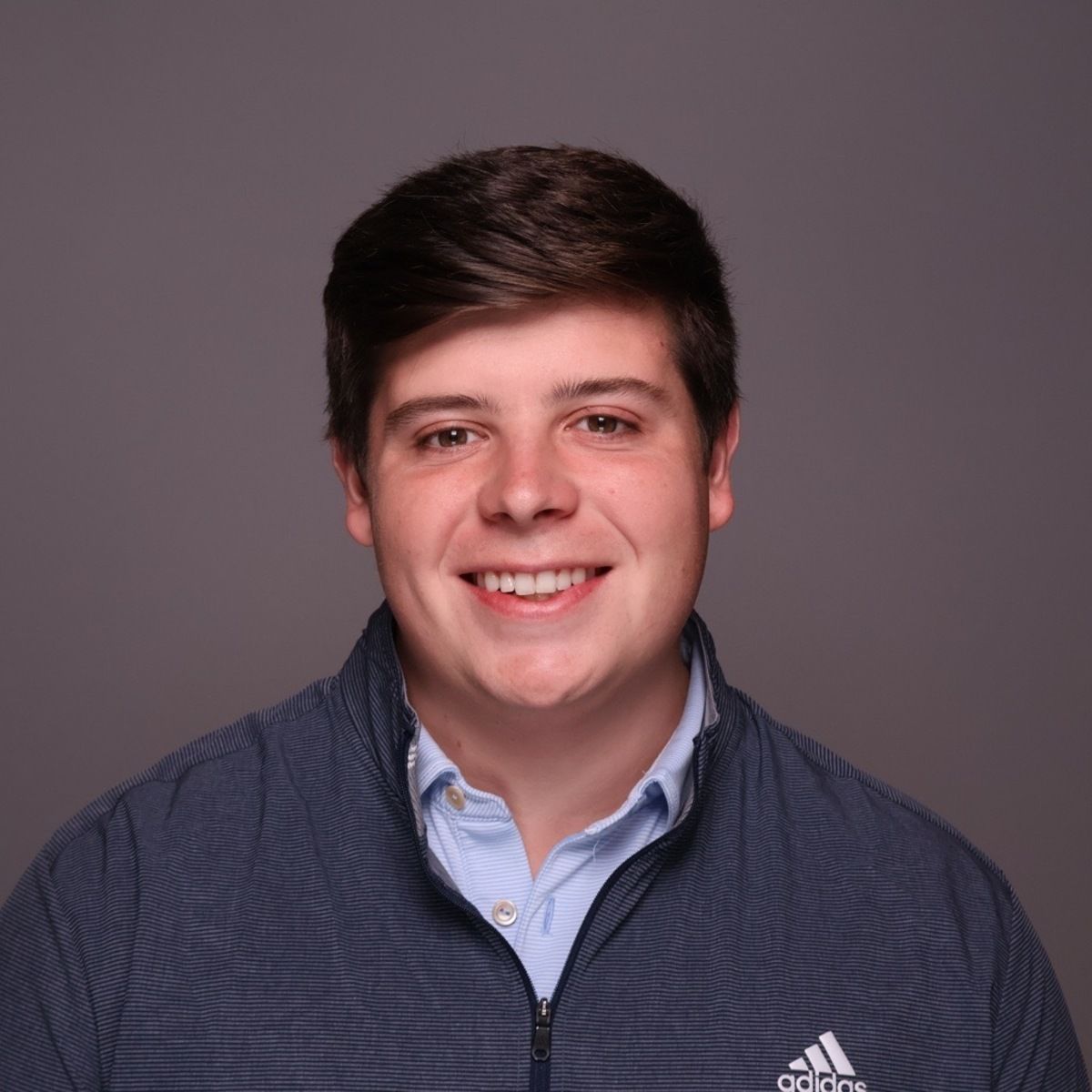
Meet Jeff Eisenband
Jeff is a broadcaster and content creator whose work today spans PGA TOUR LIVE, PGA TOUR Radio on SiriusXM, and a range of digital and live media platforms across golf and esports. His schedule is built around tournaments, broadcasts, and storytelling opportunities that place him inside the game week after week. But the foundation for that career was laid long before he ever stepped inside a broadcast booth.
See, Jeff’s path began earlier than most.
While still in high school, Jeff was accepted into the Northwestern Cherubs Program, a journalism institute that introduced him to professional-level media work before he had even graduated. Through that program, he began contributing to SportsFanLive, a site that would later become ThePostGame under the Yahoo! Sports umbrella. As a senior in high school, Jeff was writing articles from his bedroom, interviewing figures like Bernie Williams and Zack Hample, and learning what it meant to report, pitch, and deliver on real deadlines.
While atypical, those early reps set him up for success in college.
When Jeff arrived at Northwestern, his plan was simple: focus on school and see where things led. He assumed the writing he had been doing in high school might slow down once classes started. Instead, it took off in ways he couldn’t have even imagined. He kept contributing to ThePostGame while adjusting to college life, balancing coursework with deadlines and editor feedback, still writing stories without fully grasping how rare that access was for someone his age. Then, midway through his freshman year, something happened that crystallized everything.

Jeff’s Career Path
In January of his freshman year, Jeff received a call from his editor - there was an extra Super Bowl media credential available, and if Jeff could get himself to Indianapolis, the pass was his.
Jeff didn’t ask about pay. He didn’t ask about logistics. He said yes and figured out the rest.
At 18 years old, Jeff traveled from Chicago to Indianapolis to cover Super Bowl Media Day and Super Bowl XLVI between the New York Giants and New England Patriots. He attended media sessions, conducted interviews, gathered audio, and wrote stories from the event, all while juggling classes back on campus (Jeff breaks down the full experience here). On Super Bowl Sunday, he was inside Lucas Oil Stadium as the Giants won their second championship in five years. After the game, he stayed in the media center until early morning hours, writing before catching a late bus back to Chicago and making a 9 a.m. class the next day.
That week was pivotal for Jeff.
Seeing the industry up close didn’t just confirm his interest in sports media, it sharpened it. He understood what the work demanded and what it rewarded. From that point on, Jeff committed fully to building experience while still in school.
At Northwestern, he immersed himself in as many media environments as possible. He worked extensively with BTN Student U, calling live games across a wide range of sports, including volleyball, wrestling, field hockey, soccer, and more. The role paid modestly, but the value was enormous. Jeff was getting live reps, learning production workflows, and developing on-air confidence in real broadcast settings.
He also spent time with WNUR Sports, Northwestern’s student radio station, calling football and basketball games across the Big Ten. Those opportunities took him on the road to places like Minnesota, Nebraska, and Notre Dame, experiences that mirrored the travel and preparation demands of professional broadcasting.
Off campus, Jeff continued contributing to ThePostGame and added freelance writing for outlets like Golfweek. By the time he graduated, he had already done much of the entry-level work that most graduates were just beginning.
After college, Jeff joined ThePostGame full-time, covering human interest and lifestyle stories across the sports world. From 2015 to 2018, he worked in a rapidly evolving digital media landscape. Writing was no longer enough, so Jeff adapted. He conducted video interviews, hosted podcasts, appeared on camera, and learned how to package stories across platforms like Twitter, YouTube, and websites, long before short-form video became the industry standard.
What is a Golf Broadcaster?
A golf broadcaster is responsible for telling the story of the game in real time. That can include play-by-play, analyst commentary, on-course reporting, interviews, and hosting studio or digital programming. Broadcasters work across live tournament coverage, streaming platforms, radio, and digital media, helping fans understand not just what is happening on the course, but why it matters.
In today’s media landscape, the role extends far beyond traditional television. Golf broadcasters are often independent contractors who work across multiple platforms, including live streaming, radio, social media, and digital content. Many are expected to be versatile: comfortable on camera, confident on a microphone, capable of interviewing athletes, and fluent in the rhythms of live production. Success requires preparation, storytelling instincts, adaptability, and the ability to build trust with players, producers, and networks over time.
As digital media continued to shift, Jeff found himself drawn back toward broadcasting. That pull led him to opportunities with the NBA, including hosting content on the NBA Twitch channel and becoming involved with the NBA 2K League. He worked as a host, sideline reporter, and commentator, gaining experience in a space that blended traditional broadcasting with emerging digital formats.
By 2018, Jeff faced a pivotal decision.
He had spent three years building relationships, networking at major sporting events, and steadily expanding his on-camera presence. When he realized that continuing on his current path would limit his growth as a broadcaster, he made the leap to freelance. It was a calculated risk. Jeff was young, 25, and had begun to piece together enough NBA-related work to cover part of his income.
Still, the transition was not easy.
The first few months were financially quiet. December and January brought little income. Doubt crept in. Jeff recalls moments of questioning whether he had made the right decision, watching the world move around him while his schedule felt empty. But he stayed patient. He kept reaching out, following up, and saying yes when opportunities arose. Slowly, the work began to stack. By spring, momentum followed.
Over time, Jeff’s freelance career expanded across MSG Networks, DraftKings, Golf.com, the DP World Tour’s esports initiatives, and continued NBA 2K League work. Through it all, one area stood out.
Golf.
Jeff felt deeply connected to the sport, one he had played growing up, and believed there was room for a younger, more relatable voice in golf media. He leaned in, and in 2020, Jeff earned his first opportunity broadcasting with PGA TOUR LIVE on NBC Sports Gold. By 2022, when the broadcast transitioned to ESPN+, he had become a regular part of the PGA TOUR LIVE team. In 2024, he added PGA TOUR Radio on SiriusXM to his schedule.
Today, Jeff works as an independent contractor, balancing live tournament coverage, radio, and digital storytelling. The work is consistent but never guaranteed. Each week still matters, each broadcast is still an audition, and that’s what makes it fun.
Jeff’s career is not defined by a single break. It is defined by years of preparation that made those breaks possible. He didn’t wait for someone to tell him he was ready. He built readiness through action, long before it was required.
For anyone trying to break into sports media, the lesson is clear. The industry rewards those who show up early, stay adaptable, and keep working when no one is watching.
Jeff did, and that made all the difference.
Q&A: Landing a job in broadcasting with Jeff Eisenband

Q. You’ve worked across writing, radio, television, and social media throughout your career. Which skills have translated most consistently across those mediums, and how has working in each one shaped the way you approach the others?
A. Whatever medium you are working with, journalism is journalism. It's about communicating information and telling stories. That doesn't change by platform, although the approach may differ. When I started in written journalism, I may have had 1,000 words to work with on a given story. If I'm creating a social media video today, I know I have roughly one minute to communicate information and those first 3 seconds are imperative in drawing a consumer's attention.
On the broadcast side, I at least know the viewer is making an active decision to watch the live event, but I have a specific period of time to communicate information. If I'm calling golf on ESPN+, I may have a brief moment to share a factoid or story between shots, but I need to know when to get in and out and when to bring in my analyst. Journalism is more of an art form than people realize. Matching timing with efficiency is key.
With writing, it's about capturing the reader, building into the story and leaving the consumer more knowledgeable than they started. With radio, it's about communicating every detail that can't be seen. With TV, it's about adding the information that isn't already being seen. And with social media, it's about keeping information bite-sized, as opposed to writing a whole profile or shooting a whole documentary in one 60-second bit.
Q. Social media has become a major part of modern sports media. How do you think a social presence can help someone build a career in broadcasting, and where do you think young broadcasters need to be careful not to rely on it too heavily?
A. That's a good question and I'm glad you answered half of it. We have seen social media's relationship with broadcasters and journalists evolve over the last decade. There was a time when social media's biggest role in a broadcaster's job was to promote an upcoming event. Today, social media is meant to be additive. What can I, or any other broadcaster, show fans and consumers behind the scenes that is unable to be shown live on air? What is a broadcast setup like? What is a day in the life like? What information might I be getting as a journalist on the scene that I can share with fans? Is there a short-form interview I can do to provide some context for viewers?
But to your point, I think young broadcasters can get caught up in oversaturing social media and relying too heavily on a straight followers amount. Fans are still turning on sporting events to get the best live experiences. Broadcasting is still about the players, the teams and the game, and the broadcasters are not the main characters. I've been cautioned that just building a following and becoming a creator, before a broadcaster, won't give me longevity in the business. It's still way more important to hone those broadcast skills if you want to call the biggest events.
Now, does building an audience and creating content help? 100 percent. I do think it is going to be important for broadcasters going forward to show networks a tangible following (and more importantly, legitimate reach and engagement) and the ability to create value outside of the live product. I know, personally, I have to build a social audience to survive in this ever-changing industry. My wife (a Syracuse Newhouse grad) sometimes jokes with me, "Mike Tirico didn't have to build an audience." She's right. But if Mike Tirico was 32 years old now, like I am, he would be creating content to try to differentiate himself from other broadcasters.
I want to highlight three individuals who I think are setting the standard for broadcasters on social media. I don't personally know Carlo Jimenez, the radio voice of the LA Clippers, but I think he does an extraordinary job creating behind-the-scenes content from a Gen Z perspective (and the Clippers deserve a lot of credit for giving him creative freedom). Adam Amin has emerged as a top play-by-play commentator across multiple sports, and he takes the time to constantly show fans his preparation from the sidelines of Chicago Bulls games. And Sammy Levitt, one of my best friends at Northwestern, started creating behind-the-scenes content when he was on the road as a Minor League Baseball broadcaster, and now that he has a job with the San Diego Padres, he has fans who feel like they've been on the journey with him. Fans want to feel connected with the people calling their favorites sports, and these three individuals have captured what the audience is looking for.
Q. You’ve worked in a space where competition is incredibly high. What actually helps someone stand out to producers, editors, or decision-makers?
A. When I was a few years out of college, a producer I'd become close with asked me, "How do you pitch yourself in a job interview?" I said, "I tell producers and executives how versatile I can be, doing anything from broadcasting to writing, calling anything from football to golf to esports and everything in between." That's how I had been advised in college -- to be as well-rounded as possible. He said, "While that's great, executives want to know what you can provide that others can't. How are you adding something different? And many times, producers and executives don't even know what they're looking for until you tell them."
That conversation stuck with me and I changed my tone shortly after. Previously, I'd been trying to do the things I felt I was "supposed to do" as a young sports broadcaster. But I began to focus on how I could be unique. As a freelancer, I circled three areas I felt I could differentiate myself: Esports (because I was already broadcasting for the NBA 2K League), betting/fantasy (because more states were legalizing gambling and established talent didn't want to touch it) and golf (because I was passionate about the sport and felt decision-makers were looking for younger talent). These three areas may seem a bit different, but my thinking was at least one of the them would rise to the surface. And they did have overlap. For example, I landed a fantasy golf show on MSG Networks and I called golf esports for both the USGA and the DP World Tour.
I tell people all the time, I'd love to call the Super Bowl, the Masters, the NBA Finals, the Olympics, etc. But getting there takes time. Once I started to think, "How can I differentiate myself at reasonable entry points?" I started to move up the ladder -- slowly, but forward.
So how am I different? I like to believe -- and I'll leave this for decision-makers to decide -- that I can bring a young, energetic, knowledgeable voice to sports broadcasting. I like to think that my style feels more like I am having a conversation with the viewer as opposed to speaking in a static, formulaic manner. Specifically, I feel I am taking strides to use all this to elevate my voice in the golf space. And in the modern era, I have the ability to use social media to extend this effort outside of my on-air broadcasts.
Key Takeaways
1. Don’t Let Your Age Deter You. Start Now.
Jeff did not wait for permission to begin. He started building real experience in high school, which meant that by the time he reached college, he already had momentum. The earlier you start, the more room you give yourself to grow.
2. Versatility Is a Strength.
Writing, video, radio, live broadcasting, and digital content all became part of Jeff’s toolkit. As the media landscape shifted, he adapted with it. The ability to work across formats created more opportunities and kept him relevant.
3. When You See Your Lane, Go for It.
Jeff recognized that golf was where his passion and skill set aligned. Once that became clear, he leaned in. Focus, paired with consistency, helped him build credibility in a crowded space.
Feeling Inspired? Check out these opportunities.
There are a lot of summer internships in MiLB opening up this month. While not as “flashy,” these types of opportunities typically provide access and responsibility that larger organizations aren’t able to offer to students. Don’t be afraid to jump in and get your hands dirty!
Bonus: Apply for the 2026 Medill-Northwestern Journalism Institute here.
Closing Thoughts
Thank you for reading this week’s edition of So You Want to Work in Sports. I appreciate you being part of this community.
If you have ideas, feedback, or future guest suggestions, feel free to reach out at [email protected].
If you want more hands-on support as you navigate the start of your career within sports, book a 1:1 session with me here. The sooner you start preparing, the more confident you will feel when opportunities come your way.
Win the week!
-Ethan
A big 2026 starts now

Most people treat this stretch of the year as dead time. But builders like you know it’s actually prime time. And with beehiiv powering your content, world domination is truly in sight.
On beehiiv, you can launch your website in minutes with the AI Web Builder, publish a professional newsletter with ease, and even tap into huge earnings with the beehiiv Ad Network. It’s everything you need to create, grow, and monetize in one place.
In fact, we’re so hyped about what you’ll create, we’re giving you 30% off your first three months with code BIG30. So forget about taking a break. It’s time for a break-through.