In partnership with


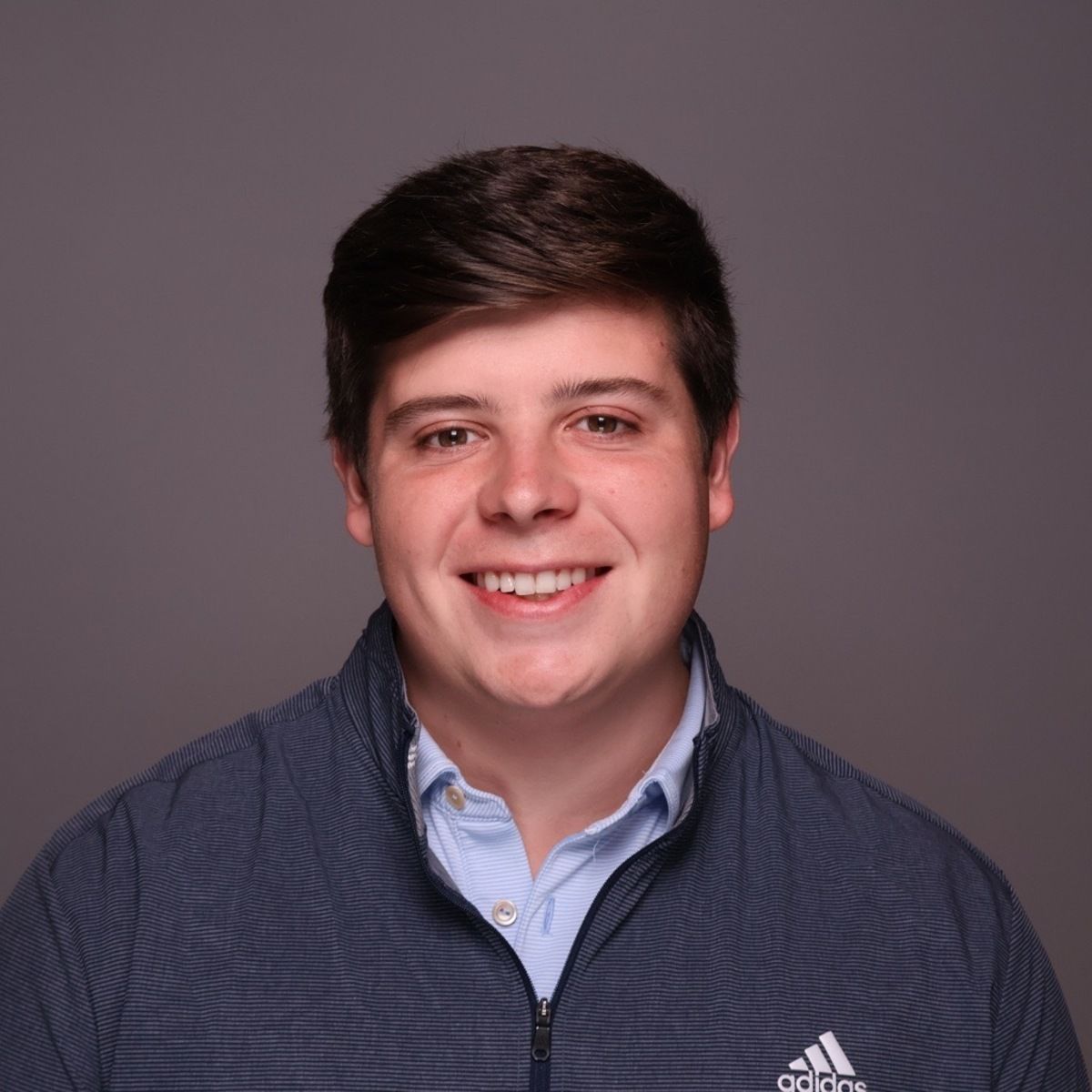
Meet Derek Bohlen.
Derek is a Player Manager and Agent at Range Sports, where he works with professional golfers on brand partnerships, endorsements, and long-term career strategy. His role sits at the intersection of athlete representation, relationship management, and business development, helping players create value on and off the course.
But Derek’s path into representation did not follow a traditional agency blueprint. There was no direct jump from college into an agent role. Instead, his career was built gradually, by stacking skills, staying close to the game, and building a reputation centered on trust.
Derek played college golf at the University of Northern Iowa, where resources were limited and progress was earned. He often jokes about their golf paradise training setup which included a white tent and a space heater while snow was still on the ground. It was not glamorous, but it was an opportunity and it reinforced a lesson that would follow him throughout his career: If you want to be good, you have to work.
After four years, he graduated with a degree in electronic media and public relations and initially planned to pursue sports broadcasting. After evaluating the reality of that career path, including frequent relocations and limited early opportunities, Derek put the sports career on pause and pivoted into tech sales.

Derek’s Career Path
His first role was in ERP software sales at Epicor, where he got the crash course in selling: learning how to communicate clearly, listen for real needs, and follow through. Those early years mattered more than he realized at the time. Sales taught him how to build trust quickly, manage rejection, and create value through relationships rather than titles - skills that would transfer to his future ambitions.
Even while he was working full-time in sales, golf never fully left his life. After several years in the industry, Derek and his wife relocated to Arizona, and he made the decision to back himself and give professional golf a shot. Over the next five to six years, he fought through the lower levels of professional golf, playing primarily on the Hooters Tour, mixing in Gateway Tour events, and attending six Q-Schools. When his playing career stalled, he transitioned into caddying, which allowed him to stay immersed in the professional golf ecosystem and maintain close relationships with his fellow players and competitors.
As his family grew, the uncertainty of tour life became harder and harder to justify. Derek hung up the caddy bib and stepped back into the business world, joining Trelevate in a sales leadership role. There, he helped manage sales teams across 15 offices and led more than 150 people. The role was demanding, fast-paced, and operationally complex. It also sharpened skills that would later define his success as an agent: accountability, leadership, and the ability to operate under pressure.
Despite his success in business, Derek still knew he wanted to return to golf in a meaningful way. He explored coaching opportunities, including conversations around collegiate roles, but ultimately decided against a path that would require frequent relocations. He wanted to build something sustainable while staying rooted with his family in Arizona.
That clarity set the stage for the turning point.
In November of 2018, Derek played a round of golf with Jeremy Moore. During the round, Jeremy mentioned a golfer he had recently met at the airport, Joel Dahmen (yes, that Joel Dahmen). Derek immediately recognized an opportunity. He and Joel had known each other for years, dating back to mini tours and time on the road. That shared history mattered.
At the time, Jeremy was beginning to build a representation business centered around his brother, PGA TOUR player Ryan Moore. The roster was small, and the operation was lean. Derek joined the group and began learning the representation business from the inside, combining Jeremy’s player-first philosophy with the relationships Derek had built over a decade in golf.
The approach was simple and consistent. Treat players like people. Be honest. Do what is best for the athlete, even when it is not the most immediately profitable option.
That approach resonated, and in time, scaled.
What is a Golf Agent?
A golf agent represents a professional golfer’s business interests and helps guide their career on and off the course. While contract negotiation is part of the role, modern golf representation extends far beyond that. Agents help secure and manage endorsement deals, equipment and apparel partnerships, appearance opportunities, and long-term brand strategy. They also serve as a trusted advisor, helping players evaluate opportunities, manage relationships with sponsors, and make decisions that protect both earnings and reputation over time.
Unlike team sports such as the NFL, NBA, or MLB, golf does not require agents to hold a specific league-issued certification or pass a players’ association exam. There is no formal degree requirement or governing body license to become a golf agent. As a result, credibility in golf representation is earned rather than granted. Success depends on trust, relationships, industry knowledge, and consistent execution. The best golf agents differentiate themselves through integrity, communication, and their ability to deliver value over the long term, not through a credential alone.
Growth did not come from recruiting tactics. It came from presence. Players noticed how engaged Derek and his team were with their clients, how often they communicated, and how involved they were in the day-to-day realities of a golfer’s career. In a sport where many athletes feel detached from representation, that level of consistency stood out. Over time, that visibility created curiosity, and curiosity opened the door to new relationships.
Joel Dahmen would FaceTime Derek and Jeremy regularly, sometimes with fellow PGA TOUR player and close friend Mark Hubbard sitting nearby. Joel joked that Mark was surprised he actually talked to his agents as much as he did, because he rarely spoke with his own. What started as casual proximity turned into real conversations. Questions followed. Trust followed that. Eventually, Mark joined their roster.
That pattern repeated itself. The business grew through reputation, not outreach, and over time the roster expanded to roughly 14 or 15 players, built almost entirely through word of mouth.
In November 2023, almost five years after joining Jeremy, Makers Sports was acquired by Range Sports, and Derek joined Range as a Player Manager and Agent. Range’s broader ecosystem across talent, media, and production expanded the scope of what representation could look like, while aligning closely with Jeremy and Derek’s relationship-driven approach. Golf, as Derek describes it, touches nearly every industry. Athletes, entertainers, and executives all want to play, connect, and build relationships through the game. That made the new partnership a natural fit.
Today, Derek works with players and brands in a modern representation model that blends partnerships, consulting, storytelling, and long-term planning. Whether advising on endorsement strategy or helping shape how an athlete’s story is told, the work is rooted in trust.
For aspiring professionals, Derek’s career is a reminder that athlete representation is rarely about shortcuts. It is about credibility, consistency, and relationships built long before you need them. Be real, be honest, be yourself and good things will follow. They did for Derek.
Q&A: Becoming a Golf Agent with Derek Bohlen

Q. You played college golf and later worked in sales before becoming an agent. What skills or lessons from those experiences have translated most directly into your work today?
A. Listening and authenticity, without question. I think it’s become a lost art to speak your mind and not be afraid to tell the truth. Life is too short to waste someone’s time, and I expect the same respect in return.
Treating people like people matters. When you’re real, clients don’t feel like they need to read between the lines. They can take you at face value. They know that if I say I’m going to do something, it’s going to happen.
Transparency is a big part of that. If I’m having conversations in the background and something might fall through, I tell them. Some people are afraid to do that, but I think honesty builds trust. I might say, “Here’s what’s happening, and here’s why it’s tough right now.” Listening, being real, and telling the truth are the skills that have translated the most.
Q. For someone trying to break into athlete representation, what does it actually take to land your first client, and where do you think most people go wrong?
A. Most people go wrong by overpromising because they want to pull the client in. They say yes to everything. The right approach is to present the facts, negotiate as well as you can, and let the athlete make the decision.
A lot of people in my position try to talk players into deals because there’s a dollar sign attached. That’s not the job. The job is to put the opportunity in front of them and then figure out how to improve it if it’s not right, or walk away if it doesn’t make sense.
For us, growth came from earning the trust of the players we already had. A good example is Joel. We talked often, sometimes just FaceTiming through business questions. He roomed frequently with Mark Hubbard, and Joel would joke that Mark was surprised he actually talked to his agents as much as he did, because he barely spoke with his own.
Those conversations created familiarity. Familiarity led to questions. Over time, that turned into trust, and eventually Mark joined us. That’s how it works. If current players trust you, other players notice. Authenticity and trust open doors faster than any pitch ever will.
Q. If you were building out your team and looking to hire someone entry level, what traits or characteristics would you look for?
A. Humility is a big one. We also look for people who are self-starters and take ownership of small tasks. If we can hand something off and know it’s going to get done well, that’s huge. It allows the whole team to move faster.
In our business, you have to earn trust internally before you’re ever put in front of high-profile athletes. The quicker you prove you’re reliable, the quicker responsibility grows.
It’s also important to understand that this can’t be about access. A lot of what we do will never show up on social media, but those moments are often the most meaningful. You get those experiences because you’ve earned trust, not because you want to broadcast them. If you focus on doing the work well and getting better at the craft, everything else follows.
Key Takeaways
1. Reputation is everything
In athlete representation, your reputation travels faster than any outreach ever will. Derek’s career shows how trust built over years on mini tours, as a caddie, and behind the scenes created opportunities when timing aligned. Players notice who shows up, who follows through, and who treats people the right way. In a small industry, how you operate when no one is watching becomes your calling card.
2. Be Authentic
Athletes can tell when someone is selling versus serving. Derek built trust by being honest, transparent, and willing to tell the truth even when it was uncomfortable. He did not overpromise to win business. He presented facts, listened, and let players make informed decisions. Authenticity is not a soft skill in sports. It is a competitive advantage.
3. Stack skills over time
Derek did not take a straight path into representation. He stacked skills across college golf, sales, professional golf, caddying, and business leadership. Each chapter sharpened something different: communication, resilience, relationship building, and execution under pressure. When the right opportunity came, he was ready because he had already done the work.
Feeling Inspired? Check out these opportunities.
Pro Am and Partner Services Intern - 3M Open (additional internships available!)
Closing Thoughts
Thank you for reading this week’s edition of So You Want to Work in Sports. I appreciate you being part of this community.
If you have ideas, feedback, or future guest suggestions, feel free to reach out at [email protected].
If you want more hands-on support as you navigate the start of your career within sports, book a 1:1 session with me here. The sooner you start preparing, the more confident you will feel when opportunities come your way.
Win the week!
-Ethan
Want more from Derek?
Connect on LinkedIn
Banish bad ads for good

Your site, your ad choices.
Don’t let intrusive ads ruin the experience for the audience you've worked hard to build.
With Google AdSense, you can ensure only the ads you want appear on your site, making it the strongest and most compelling option.
Don’t just take our word for it. DIY Eule, one of Germany’s largest sewing content creators says, “With Google AdSense, I can customize the placement, amount, and layout of ads on my site.”
Google AdSense gives you full control to customize exactly where you want ads—and where you don't. Use the powerful controls to designate ad-free zones, ensuring a positive user experience.